
Why You Should Never Copy a Cake for Your Client
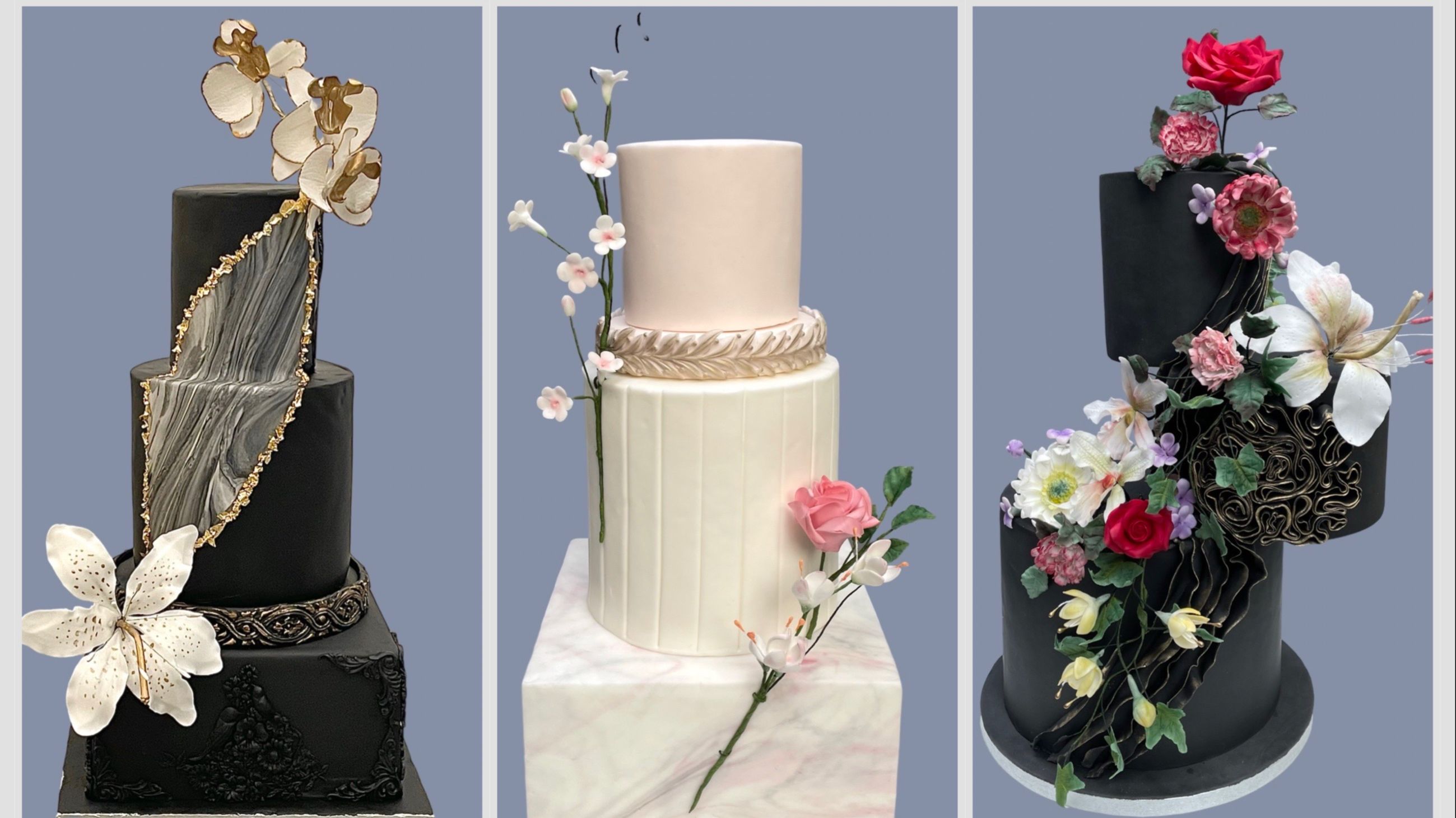
The scene is familiar. The client arrives with a photo — found on Instagram, Pinterest, or even in your own portfolio — and says: "I want exactly this."
What they imagine: placing an order like ordering a product online. Choose a model, receive the identical thing.
What they don't know: that doesn't exist in cake design.
A cake is not a manufactured product
A cake design creation is handmade. Every piece is unique — not by choice, by nature.
Ganache crystallises differently depending on the temperature of the day. Fondant reacts to ambient humidity. Sugar flowers are hand-modelled. The smoothing carries the mark of the spatula, the pressure of the moment, the light in the workspace that day.
Even if you reproduce your own creation — the same design, the same colours, the same proportions — the result will never be identical. Not because you worked less well. Because that's the reality of craft work.
A cake doesn't come out of a mould. It never has.
What the client thinks they're ordering
The client who arrives with a photo doesn't understand this yet. They see an image they like and they want that image — the way they'd order furniture from a website or a dress from a catalogue.
This confusion is normal. It comes from the fact that nobody has ever explained to them what cake design actually is.
Your role isn't to give them what they think they want. It's to explain what they're going to receive — and why it's better.
What the photo is really telling you
When a client shows you a photo, they're not saying "I want this cake." They're saying "I love this mood, this palette, this style, this feeling."
The photo is a starting point — not an order.
Your job is to understand what attracts them to that image and translate it into your own creative language. Not to reproduce. To reinterpret.
"I understand what you love about this design — the lightness, the colour palette, the floral movement. I'm going to create something in that spirit, that will be unique and truly yours."
A client who hears that doesn't feel refused. They feel they're in good hands.
What this changes for you
A cake designer who reproduces photos works against herself — even when it's her own photo she's reproducing.
She creates expectations she cannot meet. She locks herself into a reproduction mindset that stifles her creativity. And she deprives every client of a creation that is truly made for them.
A cake designer who guides her clients toward an original creation does the opposite. She educates. She positions herself. She builds a portfolio that looks like her — and a reputation that belongs to her.
What this says about your positioning
A cake designer who reproduces tells the market: I am an executor. A cake designer who creates says: I am a maker.
It's not the same clientele. It's not the same price point. It's not the same career.
Developing a creative language that belongs to you — and learning to defend it with your clients — is at the core of the Sweet Design Academy courses.
Other articles that may interest you:
- What Your Client Chooses — And What They Don't
- Your Cake Looks Beautiful. What If It Was Also Unforgettable to Taste?
- Ganache vs Buttercream in Cake Design: What Tutorials Don't Tell You
- Summer Cakes: What Your Choice of Coating Says About You
- Why the Best Cake Designers Turn Down Certain Orders — and What It Says About Their Positioning
- Why You Compose the Flavours — and Why Your Clients Are Better Off for It
