
Your Cake Looks Beautiful. What If It Was Also Unforgettable to Taste?
Let's talk about something you almost never hear in the cake design world.
You've worked on your exterior. The smoothing is flawless, the finishes are clean, the photo is stunning. The client is impressed at delivery. Then they cut the cake, they taste it — and nothing.
A forgettable sponge, an overly sweet cream, a soft texture that collapses at the slice.
They probably won't complain. But they won't come back either. And they won't tell anyone about it.
This is the most widespread problem in cake design — and the most ignored.
Why the Inside Is Almost Always Neglected
The answer is simple: nobody sees it on Instagram.
Most cake design learning revolves around the exterior. Decoration techniques, finishes, visual trends — everything that photographs well. The inside stays in the shadows. Most courses and online tutorials don't cover it, or offer a basic recipe without explaining why it works.
The result: many cake designers have mastered the shell and are improvising the rest.
What Fine Patisserie Brings to Cake Design
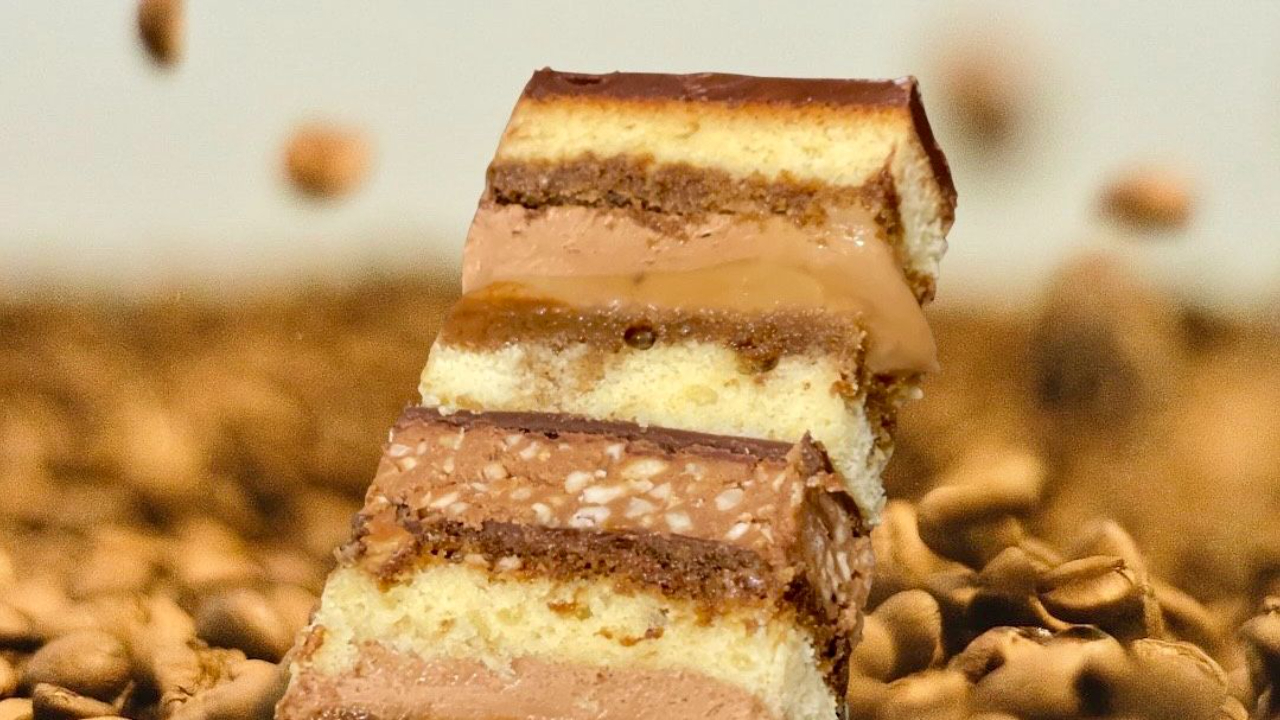
French patisserie has spent decades developing a very precise approach to building flavour. Not just recipes — a method. Every element of a cake has a function: the sponge provides structure and softness, the insert brings the acidity or freshness that cuts through, the crunch creates textural contrast, the cream wraps and binds everything together.
When these elements are built together — not randomly assembled, built — each bite naturally leads to the next. This is what's called flavour architecture.
This isn't reserved for restaurant pastry chefs. It's a logic that any cake designer can learn and apply to their work.
Three Concrete Things You Can Do Right Now
Taste your sponge alone, with nothing on it. A good sponge should have flavour and a pleasant texture by itself, before adding cream or insert. If you wouldn't happily eat your sponge on its own, that's the first thing to work on.
Introduce an acidic or fruity element. Most cake designs lack contrast — everything is soft, sweet, heavy. A fruit insert (raspberry, passion fruit, lemon) or even a simple compote cuts through and makes each bite feel lighter than it is. That's often the difference between a cake you finish and a cake you go back for seconds of.
Think about the slice before you assemble. A well-constructed cake reveals something when cut — clean layers, colours, visible textures. Before building your next cake, picture what it will look like cut in half. If the answer is "a uniform beige mass", something is missing.
When the Inside Becomes Your Real Difference
A visually impressive cake attracts. A cake that is just as remarkable to taste retains. That's what clients talk about, what they remember, what generates referrals.
It's also what justifies a different positioning — and different prices.
The Flavours & Architecture workshop at Sweet Design Academy is built around exactly this logic: transposing the codes of fine patisserie to the inside of the cake design. Sponges, inserts, crunch layers, light creams — and above all, the method to create your own signature recipes, consistent and reproducible.
It's designed for cake designers who already have an established practice and want to take that next step.
