
Ganache vs Buttercream in Cake Design: What Tutorials Don't Tell You
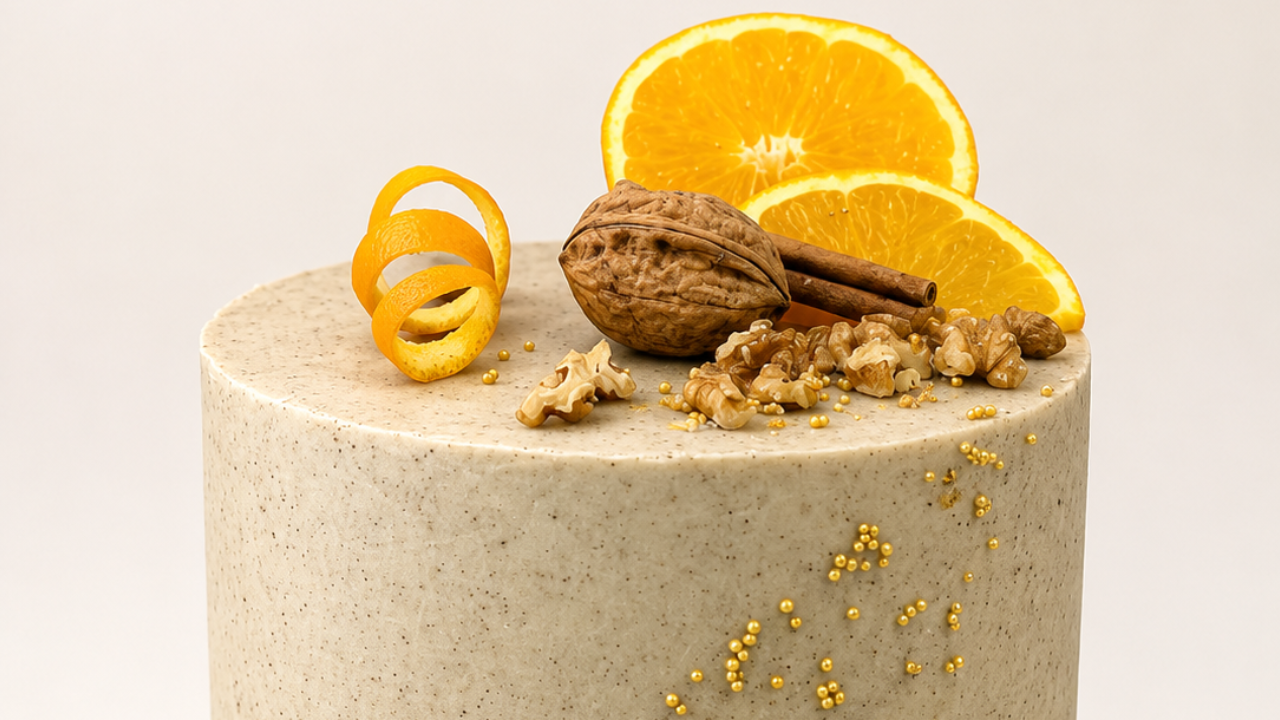
If you learned cake design online, you probably learned with buttercream. It's what the vast majority of tutorials use. It's what people who follow them reproduce. And it's become a default — not because it's the best option, but because it's the most common one.
Those are not the same thing.
What Nobody Tells You About Buttercream
Buttercream is presented as accessible. In reality, it's unpredictable.
It splits easily during preparation — a slight temperature variation in your ingredients and the texture is compromised. It melts in heat. It cracks as it cools. It sags under the weight of tiers. And once on the cake, it changes over time — it weeps, it dulls, it loses its structure.
This is not a forgiving material. It's an unstable one that people use out of habit and imitation.
What Ganache Changes
Covering ganache sets. That's not a subjective quality — it's its chemical nature.
Once crystallised, it provides a firm, stable base with sharp edges that buttercream simply cannot replicate.
In practice:
It holds its edges. Sharp angles, smooth surfaces, clean finishes — ganache makes them possible. Buttercream doesn't.
It resists heat. In summer, in transit, in a poorly air-conditioned venue — ganache doesn't move. Buttercream melts, sags, and deforms everything placed on top of it.
It's compatible with every decoration. Wafer paper, fondant, chocolate work — ganache is a neutral, dry base. Buttercream, with its moisture content, compromises wafer paper, warps fine decorations, and softens whatever it touches.
It lasts. A ganache-coated cake stays stable well beyond 48 hours. For any order with a gap between production and delivery, it's the only serious option.
Why Buttercream Still Dominates
Because tutorials use it. Because beginners copy tutorials. Because beginners become cake designers who carry on with what they learned. And so on.
This isn't a technical choice. It's a default transmission.
Ganache requires understanding crystallisation, respecting ratios, preparing the day before. It's less immediate. But every constraint it imposes is a constraint that produces a better result.
Using buttercream because everyone does is optimising for the norm — not for quality.
Want to go further?
Covering ganache — its ratio, preparation, and application — is one of the cornerstones of the Fondations du Cake Design workshop at Sweet Design Academy. Along with every technical decision that makes the difference between a cake that holds and a practice that holds.
Other articles that may interest you:
Self-taught cake decorator: do you really know what you don't know?
Your Cake Looks Beautiful. What If It Was Also Unforgettable to Taste?
What Your Client Chooses — And What They Don't
