
Fruit in Cake Design: What Works and What Ruins Everything
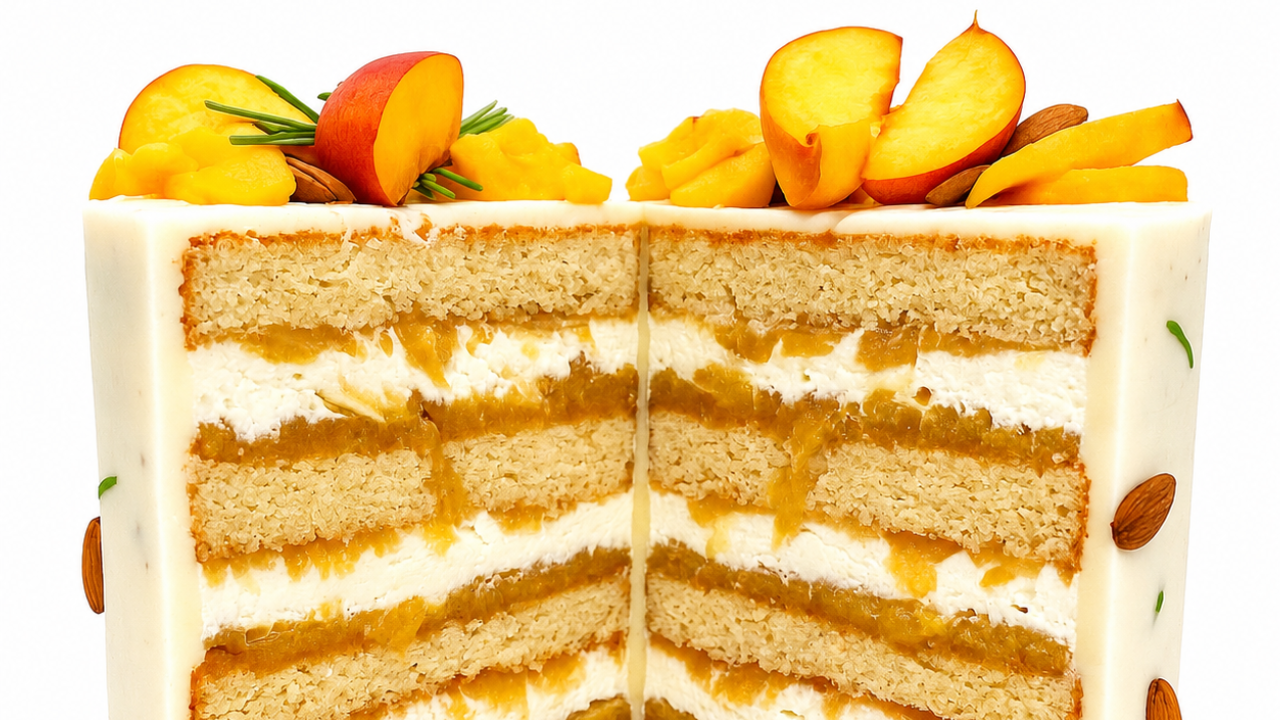
Fruit sells. In a photo, a raspberry insert or a mango coulis looks dreamy. In the mouth, done right, it's irresistible.
Done wrong, it's a cream that liquefies, tiers that sink, and a texture that's compromised within hours of delivery.
The problem isn't the fruit. It's the water it contains.
The Real Enemy: Uncontrolled Moisture
In fine patisserie, every gram of moisture counts. A well-whipped cream, a properly crystallised ganache, a perfectly baked sponge — all of it can be destabilised by a single poorly managed source of moisture.
Fruit is a major one. And it's consistently underestimated.
What to Avoid
Frozen fruit added directly. As it thaws, it releases a significant amount of water. Incorporate it into a cream or directly into an assembly and that water migrates. Your cream loses structure, your layers become unstable.
Fresh fruit, cut. The moment a fruit is cut, it starts releasing juice. Inside a closed cake, that juice has nowhere to go — it soaks into the adjacent layers and compromises the textures within hours.
What Works
Whole fresh fruit. Whole strawberries, raspberries, blueberries — they retain their integrity, release far less moisture, and hold well in an assembly. The cut also looks significantly cleaner.
Tinned fruit, properly drained. Not quickly rinsed through a sieve — drained, then dried on absorbent paper. The preservation syrup is loaded with sugar and water: it needs to be eliminated completely before use.
Cooked fruit. Compotes, candied fruit, set coulis — cooking eliminates most of the free water. A pectin or gelatine-set insert stays stable inside the cake for several days. It's the most reliable solution for orders with a gap between production and delivery.
The Rule to Remember
Before incorporating any fruit into a cake, ask yourself one question: is this source of moisture controlled?
If you can't answer yes with certainty, change your approach.
Fruit is beautiful. It tastes good. But in cake design, it needs to be treated for what it is: a technical variable to master, not an ingredient you add freely.
The difference between a cake that holds for 48 hours and a cake that weeps after 4 — it's usually right here.
Want to go further?
Fruit, cream selection, production planning, pricing — everything that makes the difference between a cake that holds and a professional practice that holds — is exactly what we work through in the Fondations du Cake Design workshop at Sweet Design Academy.
Other articles that may interest you:
Self-taught cake decorator: do you really know what you don't know?
Your Cake Looks Beautiful. What If It Was Also Unforgettable to Taste?
What Your Client Chooses — And What They Don't
Ganache vs Buttercream in Cake Design: What Tutorials Don't Tell You
