
Flavour Combinations in Cake Design: The Logic Nobody Explains
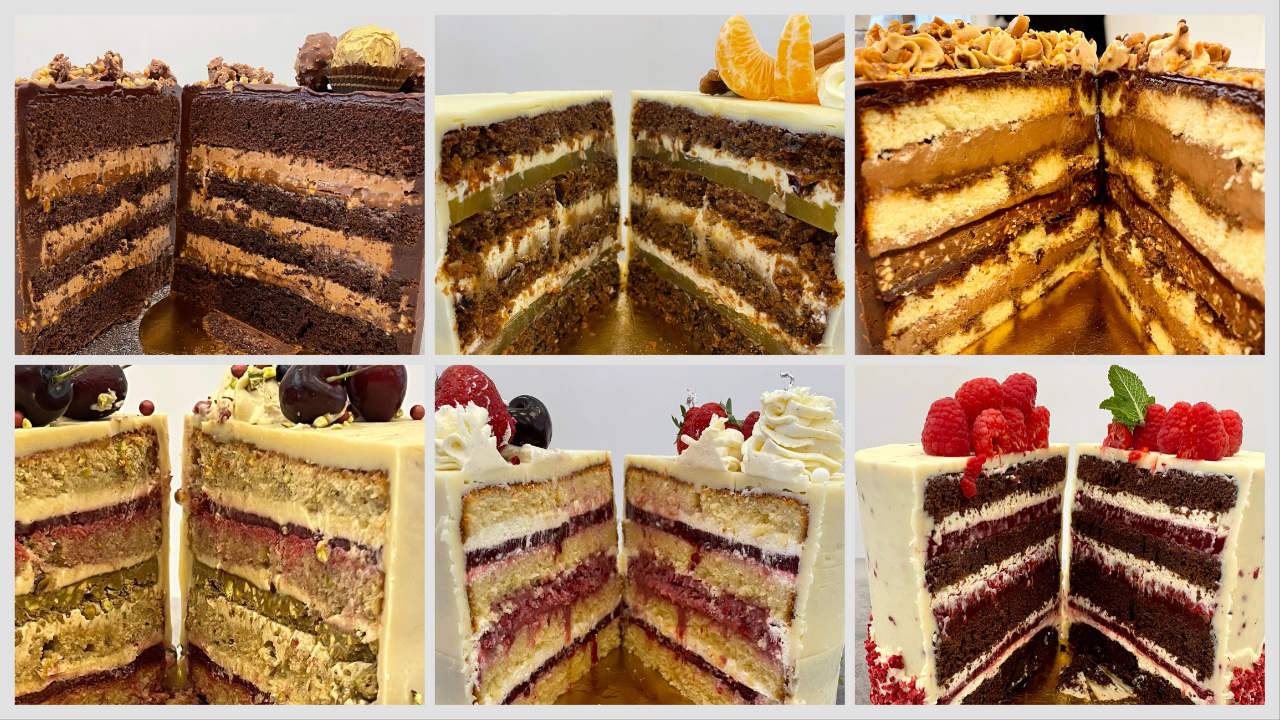
A beautiful cake catches the eye. A cake you remember after eating it — that's something else.
That memory doesn't come from the design. It comes from what happens in the mouth.
And that depends entirely on how the flavours were built together.
What most cake designers do
They offer separate flavours and let the client combine as they wish.
The result is often disappointing. Not because the flavours are bad. Because they weren't thought through together.
A flavour combination isn't an addition. It's a construction.
The logic of a combination that works
Intensities A strong flavour needs a neutral base to express itself. Intense praline overwhelms an already sweet cream. Sharp lemon is aggressive without a soft cream to balance it. The balance of intensities isn't intuitive — it's built.
Textures They carry flavours as much as the flavours themselves. A melting insert in a light cream doesn't produce the same experience as the same insert in a dense cream. Ignoring textures ...
Summer Cake Delivery: What Happens Between Your Workspace and the Wedding Venue
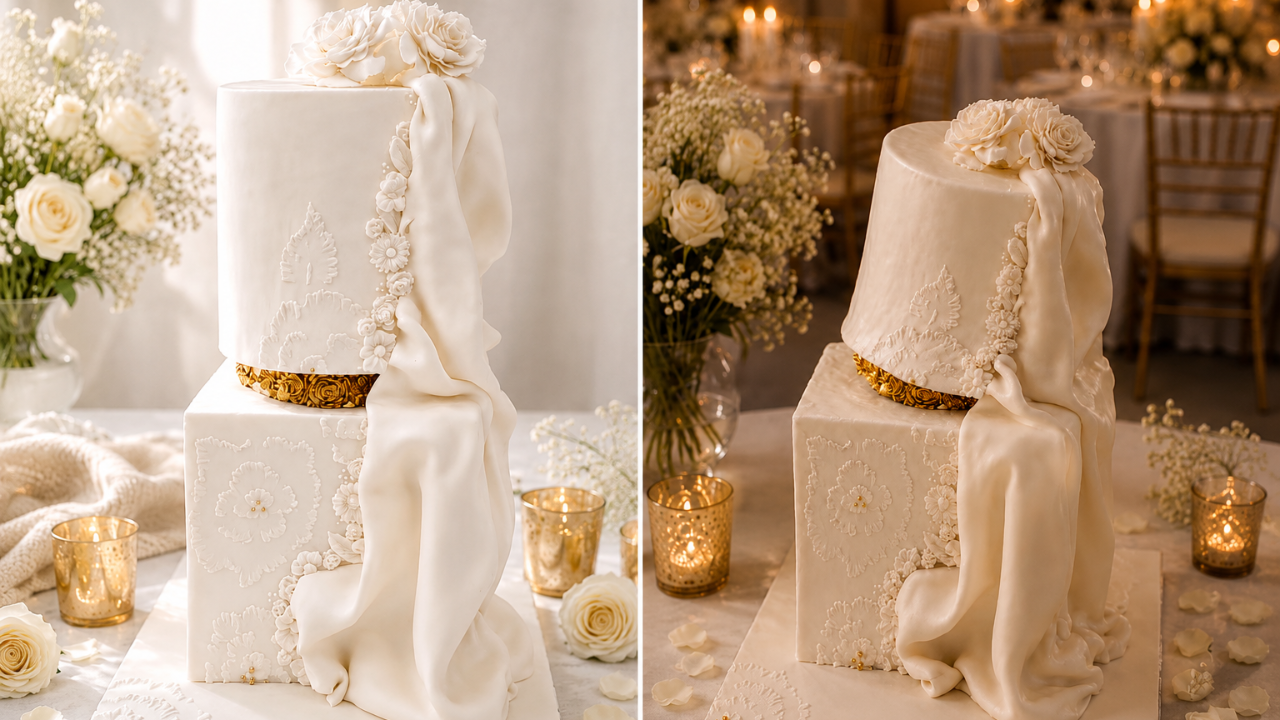
You've spent hours on this cake. It's perfect when it leaves your workspace.
What arrives at the venue is another story.
In summer, delivery is the riskiest step in the process. Not because you drive badly. Because heat, vibrations, transport time, and on-site storage conditions are variables you don't control — unless you anticipate them.
What heat does during transport
In a car in summer, even with air conditioning, the temperature rises quickly. Buttercream softens first. But even ganache has its limits. Fondant absorbs humidity. Fragile decorations are the first casualties.
It's not heat alone that causes the problem. It's the combination of heat, vibrations, and duration.
What happens on site
You deliver an impeccable cake. Two hours later, it's in a room with no air conditioning, under spotlights, next to a hot buffet.
The client doesn't know that the room temperature is a problem. They don't know that stage spotlights can destroy a fondant decoration in under an hour...
Why You Should Never Copy a Cake for Your Client
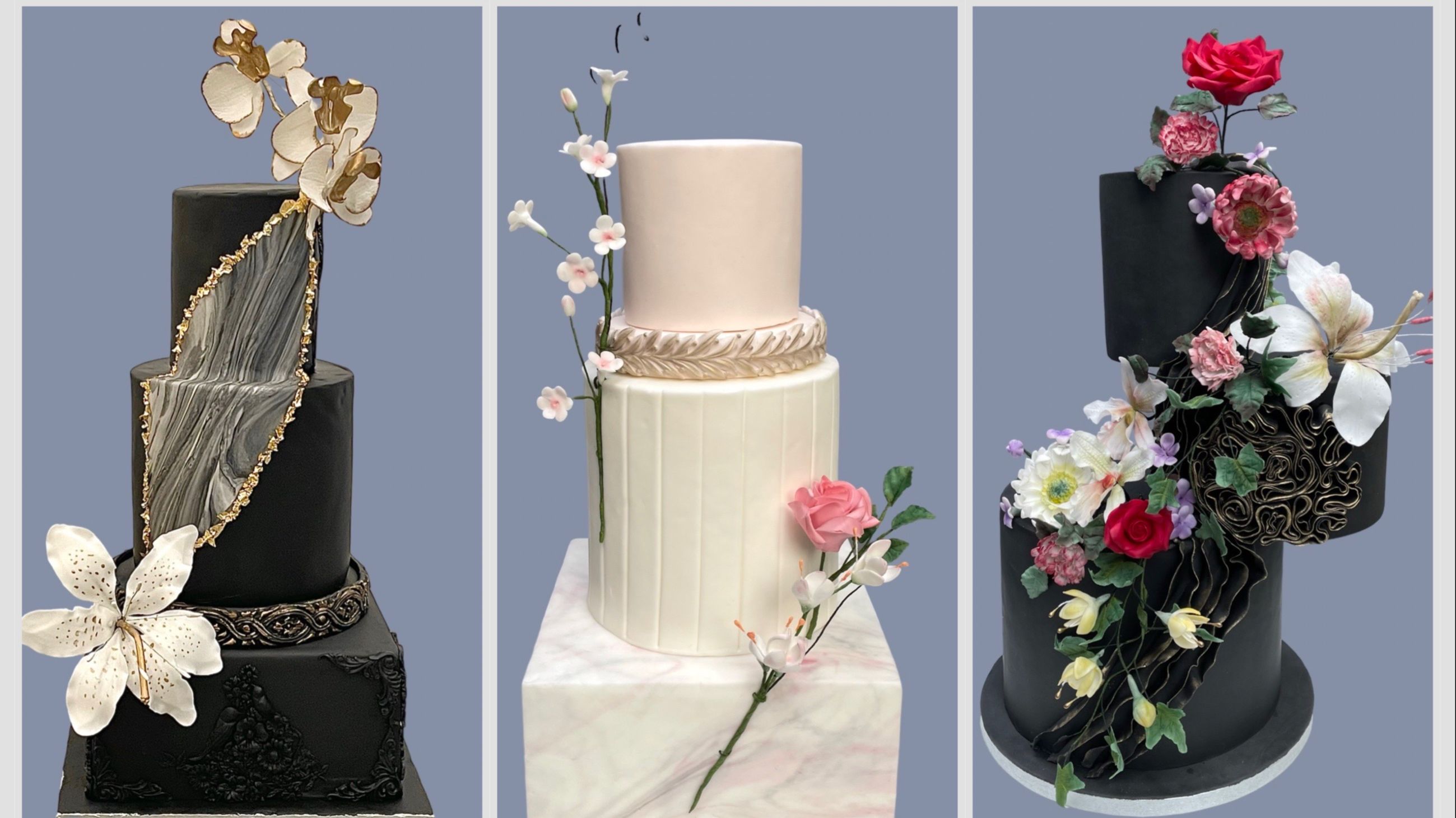
The scene is familiar. The client arrives with a photo — found on Instagram, Pinterest, or even in your own portfolio — and says: "I want exactly this."
What they imagine: placing an order like ordering a product online. Choose a model, receive the identical thing.
What they don't know: that doesn't exist in cake design.
A cake is not a manufactured product
A cake design creation is handmade. Every piece is unique — not by choice, by nature.
Ganache crystallises differently depending on the temperature of the day. Fondant reacts to ambient humidity. Sugar flowers are hand-modelled. The smoothing carries the mark of the spatula, the pressure of the moment, the light in the workspace that day.
Even if you reproduce your own creation — the same design, the same colours, the same proportions — the result will never be identical. Not because you worked less well. Because that's the reality of craft work.
A cake doesn't come out of a mould. It never has.
What the client thinks th...
Pourquoi les meilleurs cake designers refusent certaines commandes — et ce que ça dit de leur positionnement
Il y a une croyance très répandue dans le cake design : accepter toutes les commandes, c'est être professionnelle. Refuser, c'est se priver de revenus.
C'est exactement l'inverse.
Les cake designers qui ont construit une réputation solide, un agenda rempli et une clientèle fidèle ne disent pas oui à tout. Elles ont appris — souvent à leurs dépens — que chaque commande acceptée est aussi une déclaration sur ce qu'elles sont.
Une commande acceptée, c'est un message envoyé
Quand vous acceptez une commande, vous dites au marché : c'est ce que je fais.
Un gâteau licorne pour 80 € parce que la cliente avait un petit budget ? Vous venez d'attirer d'autres clientes avec un petit budget qui veulent des gâteaux licorne.
Un wedding cake au dernier moment parce que vous ne vouliez pas perdre la commande ? Vous venez de signaler que vos conditions sont négociables.
Un design que vous n'aimez pas, dans un style qui n'est pas le vôtre, pour un prix en dessous de votre tarif ? Vous venez de t...
