
Summer Cake Delivery: What Happens Between Your Workspace and the Wedding Venue
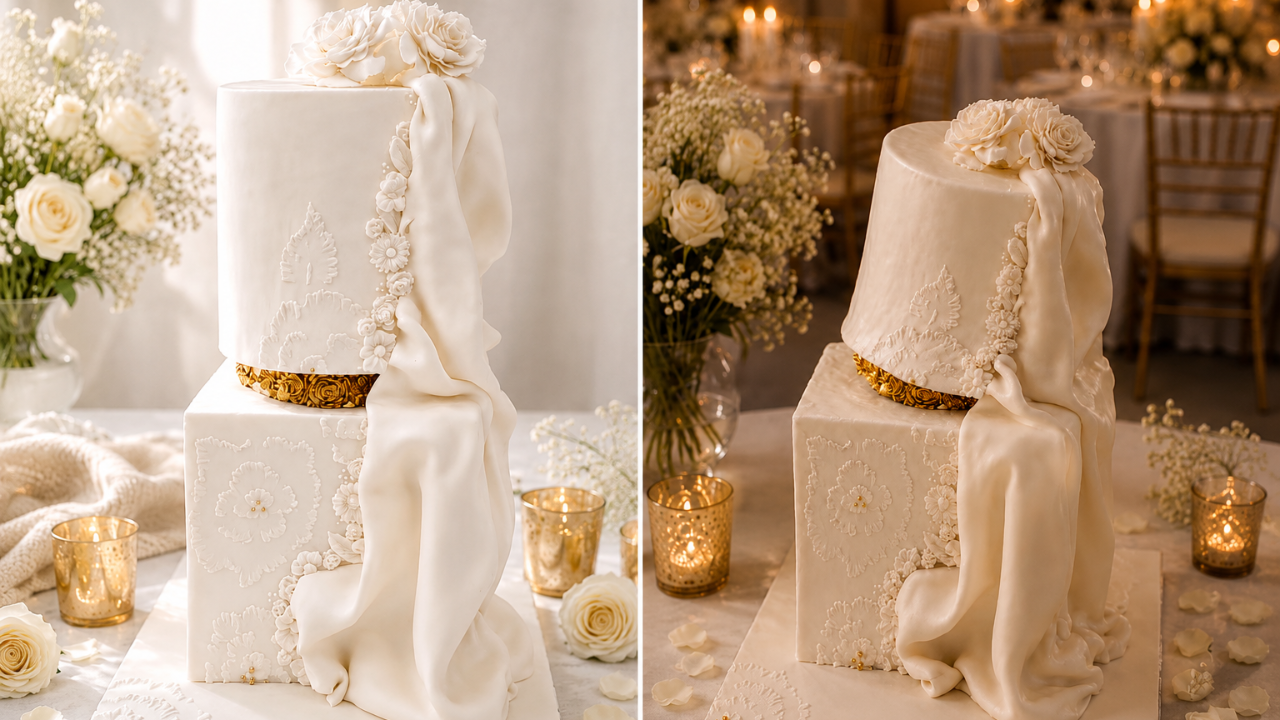
You've spent hours on this cake. It's perfect when it leaves your workspace.
What arrives at the venue is another story.
In summer, delivery is the riskiest step in the process. Not because you drive badly. Because heat, vibrations, transport time, and on-site storage conditions are variables you don't control — unless you anticipate them.
What heat does during transport
In a car in summer, even with air conditioning, the temperature rises quickly. Buttercream softens first. But even ganache has its limits. Fondant absorbs humidity. Fragile decorations are the first casualties.
It's not heat alone that causes the problem. It's the combination of heat, vibrations, and duration.
What happens on site
You deliver an impeccable cake. Two hours later, it's in a room with no air conditioning, under spotlights, next to a hot buffet.
The client doesn't know that the room temperature is a problem. They don't know that stage spotlights can destroy a fondant decoration in under an hour.
Your role is to know this for them — and to tell them before it happens.
What you need to anticipate
On-site storage conditions, delivery time, transport — all of this is prepared before you leave, not when you're loading the car.
The delivery receipt: your protection
Once the receipt is signed, your responsibility ends.
Without a signed delivery receipt, you are responsible for everything that happens after you leave. With one — you're not.
What this says about you
A cake that arrives intact in the middle of Summer, that holds until cutting time — that's not luck.
That's anticipation. Organisation. Professionalism.
It's also what the client talks about. And that's the reputation that fills an order book.
Detailed delivery logistics, the delivery receipt content, and managing storage conditions are part of what is taught in the Sweet Design Academy Wedding Cake course.
→ [Discover the Wedding Cake course]
Other interesting articles :
