
Summer Cake Delivery: What Happens Between Your Workspace and the Wedding Venue
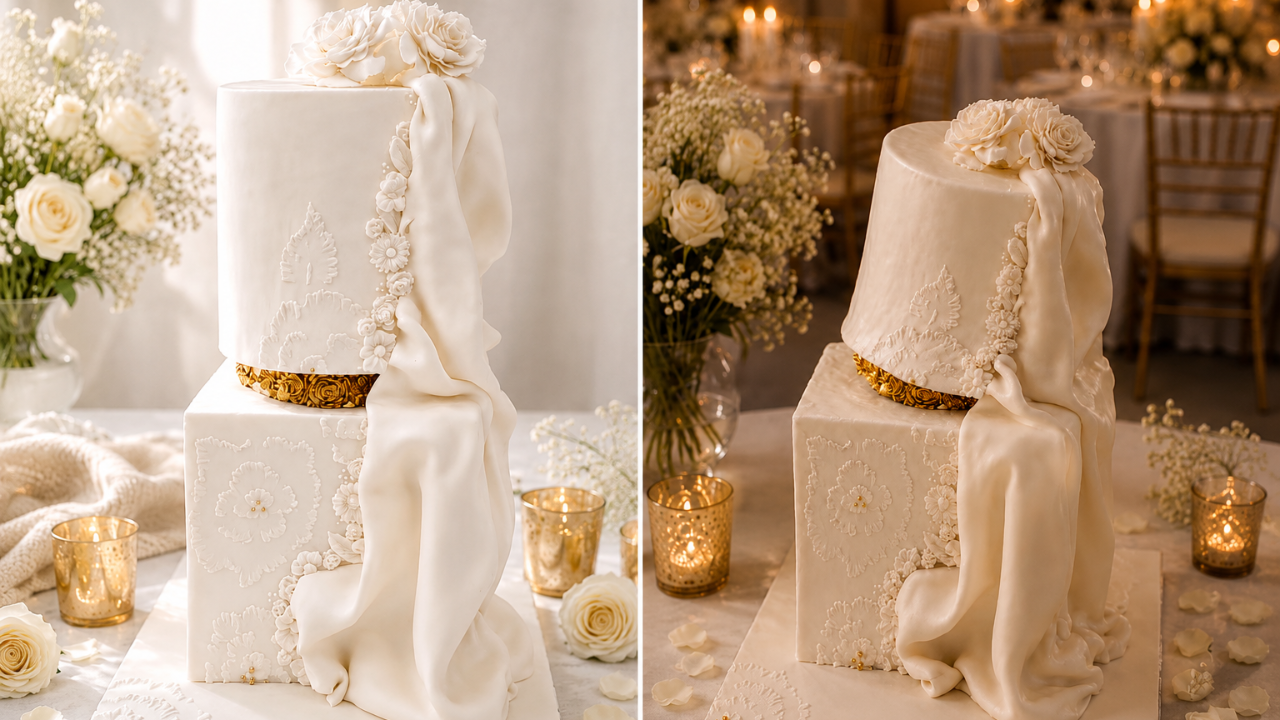
You've spent hours on this cake. It's perfect when it leaves your workspace.
What arrives at the venue is another story.
In summer, delivery is the riskiest step in the process. Not because you drive badly. Because heat, vibrations, transport time, and on-site storage conditions are variables you don't control — unless you anticipate them.
What heat does during transport
In a car in summer, even with air conditioning, the temperature rises quickly. Buttercream softens first. But even ganache has its limits. Fondant absorbs humidity. Fragile decorations are the first casualties.
It's not heat alone that causes the problem. It's the combination of heat, vibrations, and duration.
What happens on site
You deliver an impeccable cake. Two hours later, it's in a room with no air conditioning, under spotlights, next to a hot buffet.
The client doesn't know that the room temperature is a problem. They don't know that stage spotlights can destroy a fondant decoration in under an hour...
Summer Ganache Coating: The Ratios That Make the Difference
Ganache is the most technically reliable coating in professional cake design. But a poorly proportioned ganache in summer behaves like buttercream — it softens, it slides, it doesn't hold.
The problem isn't the ganache. It's the ratio.
Why ratios change with temperature
Ganache holds because of cocoa butter crystallisation. The higher the proportion of chocolate relative to cream, the firmer the structure at room temperature.
In winter, in a cool workspace, a standard ratio is sufficient. In summer, in a reception venue at 24°C, that same ratio produces a ganache that's too soft — one that gives way under ambient heat, spotlights, and the weight of fondant.
The solution is straightforward: increase the proportion of chocolate.
Chocolate:cream ratios by season
Dark chocolate
| Season | Chocolate:cream ratio |
|---|---|
| Winter / air-conditioned workspace | 2:1 |
| Summer / ambient heat | 2.5:1 to 3:1 |
Summer example: 300g dark chocolate to 100-120g cream.
White chocolat...
Summer Cakes: What Your Choice of Coating Says About You
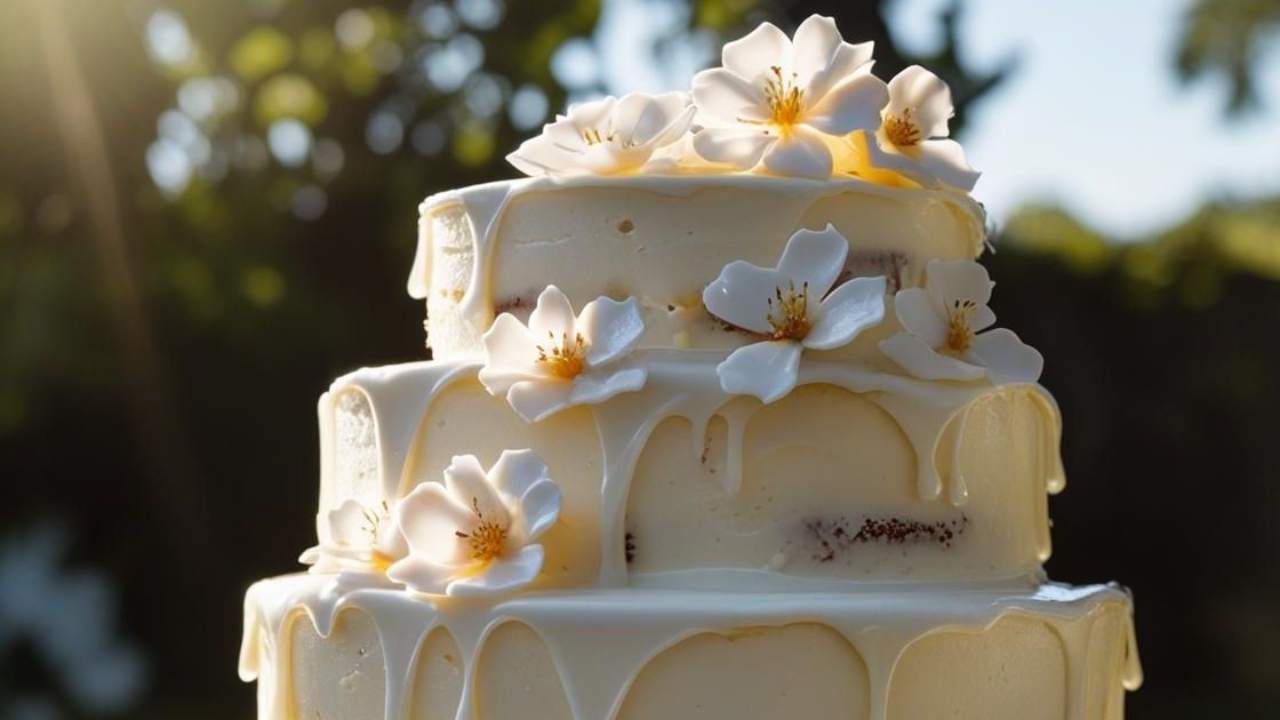
A cake that holds is invisible. The client expected it, it's there, impeccable — that's normal.
A cake that melts is memorable. For the wrong reasons. The client remembers it. They talk about it. Sometimes they photograph it.
In summer, the difference between these two scenarios has nothing to do with your skill level. It comes down to one choice: your coating.
Buttercream in summer: a risk you're passing on to your reputation
Buttercream softens. That's its nature. Above 22°C — a common temperature in a reception venue in summer, under spotlights, with dozens of people — it no longer holds.
It slides. It sweats. Edges round off, sharp angles disappear, decorations shift.
Your client doesn't know why it happened. They just know the cake no longer looks like what they ordered. And it's your name they associate with that memory.
Ganache: the coating that protects your work
Ganache resists ambient heat because its structure is based on cocoa butter — a fat that crystallises as...
