
Food Colouring in Cake Design: Gel, Powder, Liquid — Which One for What
Not all colourings are equal. And not all are used the same way.
Choosing the wrong colouring for the wrong application means risking a split ganache, a dull colour instead of a vibrant one, or a fondant that sticks and tears during smoothing.
Here's the technical logic behind the choice.
Gel colourings
This is the most versatile format in cake design.
Gel colourings are concentrated, water-soluble, and integrate easily into most water-based preparations: buttercreams, glazes, fondant, royal icing.
Their concentration allows you to achieve vibrant shades without altering the texture of the preparation — provided you don't overdo it. Too much gel colouring in a buttercream can make it bitter and slightly change its consistency.
Use for: buttercream, glaze, fondant, royal icing, coloured sponges and biscuits.
Avoid for: chocolate and ganache — the water content in gel causes chocolate to seize immediately.
Powder colourings
Powder colourings are the most versatile — and the...
Colorants en cake design : gel, poudre, liquide — lequel pour quoi
Tous les colorants ne se valent pas. Et tous ne s'utilisent pas de la même façon.
Choisir le mauvais colorant pour la mauvaise application, c'est risquer de déstabiliser une ganache, d'obtenir une couleur terne au lieu d'une couleur franche, ou de voir une pâte à sucre coller et se déchirer au lissage.
Voici la logique technique derrière le choix.
Les colorants en gel
C'est le format le plus polyvalent en cake design.
Les colorants en gel sont concentrés, hydrosolubles, et s'intègrent facilement dans la plupart des préparations à base d'eau : crèmes au beurre, glaçages, pâte à sucre, glace royale.
Leur concentration permet d'obtenir des teintes franches sans modifier la texture de la préparation — à condition de ne pas en abuser. Un excès de colorant gel dans une crème au beurre peut la rendre amère et modifier légèrement sa consistance.
À utiliser pour : crème au beurre, glaçage, pâte à sucre, glace royale, génoises et biscuits colorés.
À éviter pour : le chocolat et la gana...
Summer Cake Delivery: What Happens Between Your Workspace and the Wedding Venue
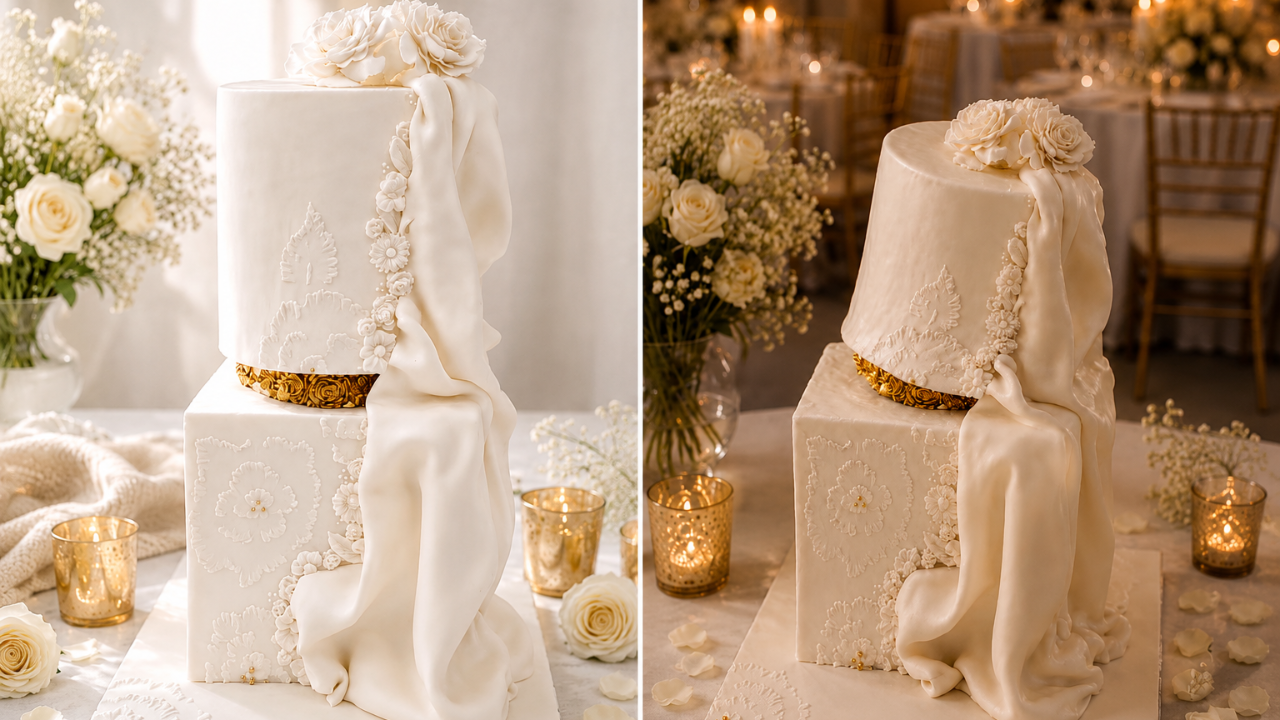
You've spent hours on this cake. It's perfect when it leaves your workspace.
What arrives at the venue is another story.
In summer, delivery is the riskiest step in the process. Not because you drive badly. Because heat, vibrations, transport time, and on-site storage conditions are variables you don't control — unless you anticipate them.
What heat does during transport
In a car in summer, even with air conditioning, the temperature rises quickly. Buttercream softens first. But even ganache has its limits. Fondant absorbs humidity. Fragile decorations are the first casualties.
It's not heat alone that causes the problem. It's the combination of heat, vibrations, and duration.
What happens on site
You deliver an impeccable cake. Two hours later, it's in a room with no air conditioning, under spotlights, next to a hot buffet.
The client doesn't know that the room temperature is a problem. They don't know that stage spotlights can destroy a fondant decoration in under an hour...
Livraison de gâteaux en été : les risques entre votre atelier et le moment de la découpe.
Vous avez passé des heures sur ce gâteau. Il est parfait à la sortie de l'atelier.
Ce qui arrive à destination est une autre histoire.
En été, la livraison est l'étape la plus risquée du processus. Pas parce que vous conduisez mal. Parce que la chaleur, les vibrations, le temps de transport et les conditions de stockage sur place sont des variables que vous ne contrôlez pas — sauf si vous les anticipez.
Ce que la chaleur fait pendant le transport
Dans une voiture en été, même avec la climatisation, la température monte vite. La crème au beurre ramollit en premier. Mais même la ganache a ses limites. La pâte à sucre absorbe l'humidité. Les décorations fragiles sont les premières victimes.
Ce n'est pas la chaleur seule qui pose problème. C'est la combinaison chaleur, vibrations et durée.
Ce qui se passe sur place
Vous livrez un gâteau impeccable. Deux heures plus tard, il est dans une salle sans climatisation, sous des spots, à côté d'un buffet chaud.
Le client ne sait pas qu...
Summer Ganache Coating: The Ratios That Make the Difference
Ganache is the most technically reliable coating in professional cake design. But a poorly proportioned ganache in summer behaves like buttercream — it softens, it slides, it doesn't hold.
The problem isn't the ganache. It's the ratio.
Why ratios change with temperature
Ganache holds because of cocoa butter crystallisation. The higher the proportion of chocolate relative to cream, the firmer the structure at room temperature.
In winter, in a cool workspace, a standard ratio is sufficient. In summer, in a reception venue at 24°C, that same ratio produces a ganache that's too soft — one that gives way under ambient heat, spotlights, and the weight of fondant.
The solution is straightforward: increase the proportion of chocolate.
Chocolate:cream ratios by season
Dark chocolate
| Season | Chocolate:cream ratio |
|---|---|
| Winter / air-conditioned workspace | 2:1 |
| Summer / ambient heat | 2.5:1 to 3:1 |
Summer example: 300g dark chocolate to 100-120g cream.
White chocolat...
Ganache de couverture en été : les ratios qui font la différence
La ganache de couverture est la base technique la plus fiable du cake design professionnel.
Mais une ganache mal dosée en été se comporte comme une crème au beurre — elle ramollit, elle glisse, elle ne tient pas.
Le problème n'est pas la ganache. C'est le ratio.
Pourquoi les ratios changent avec la température
La ganache tient grâce à la cristallisation du beurre de cacao. Plus la proportion de chocolat est élevée par rapport à la crème, plus la structure est ferme à température ambiante.
En hiver, dans un atelier à 18°C, un ratio standard suffit. En été, dans une salle de réception à 24°C ou plus, ce même ratio produit une ganache trop souple — qui cède sous la chaleur ambiante, sous les spots, sous la pression du fondant.
La solution est simple : augmenter la proportion de chocolat.
Les ratios chocolat:crème selon la saison
Chocolat noir
| Saison | Ratio chocolat:crème |
|---|---|
| Hiver / atelier climatisé | 2:1 |
| Été / chaleur ambiante | 2,5:1 à 3:1 |
Exemple ét...
Summer Cakes: What Your Choice of Coating Says About You
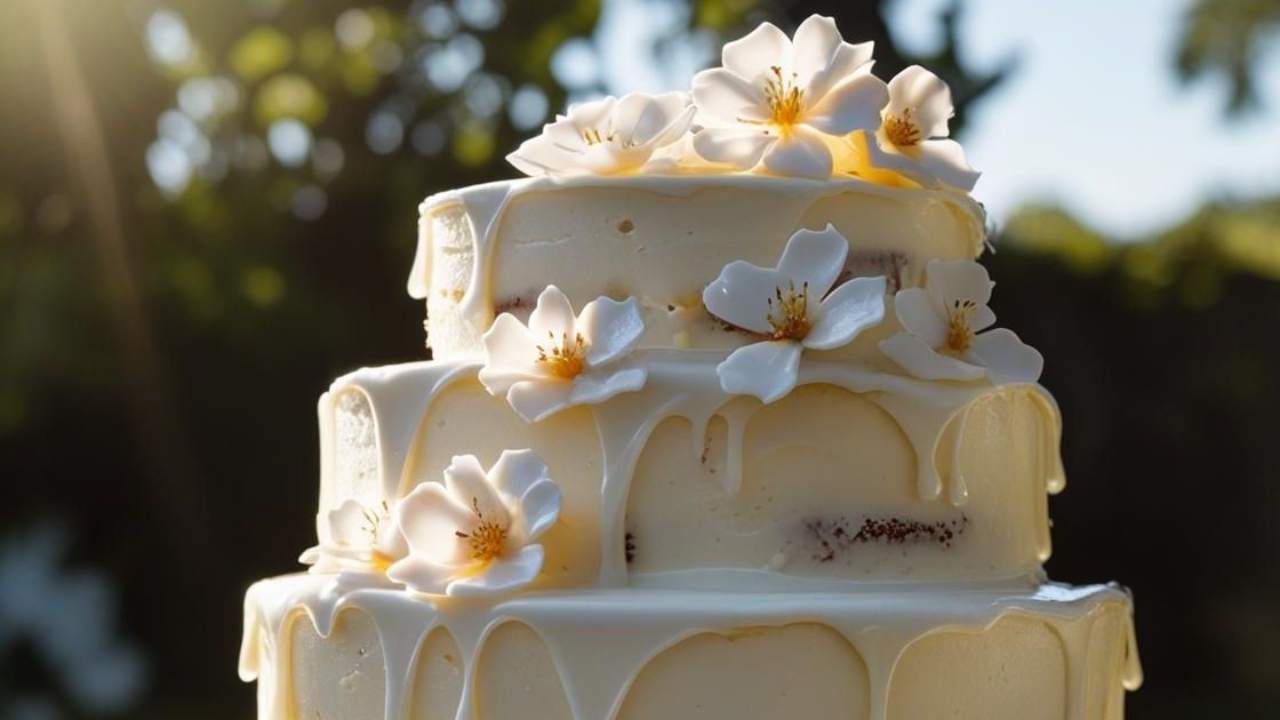
A cake that holds is invisible. The client expected it, it's there, impeccable — that's normal.
A cake that melts is memorable. For the wrong reasons. The client remembers it. They talk about it. Sometimes they photograph it.
In summer, the difference between these two scenarios has nothing to do with your skill level. It comes down to one choice: your coating.
Buttercream in summer: a risk you're passing on to your reputation
Buttercream softens. That's its nature. Above 22°C — a common temperature in a reception venue in summer, under spotlights, with dozens of people — it no longer holds.
It slides. It sweats. Edges round off, sharp angles disappear, decorations shift.
Your client doesn't know why it happened. They just know the cake no longer looks like what they ordered. And it's your name they associate with that memory.
Ganache: the coating that protects your work
Ganache resists ambient heat because its structure is based on cocoa butter — a fat that crystallises as...
