
Flavour Combinations in Cake Design: The Logic Nobody Explains
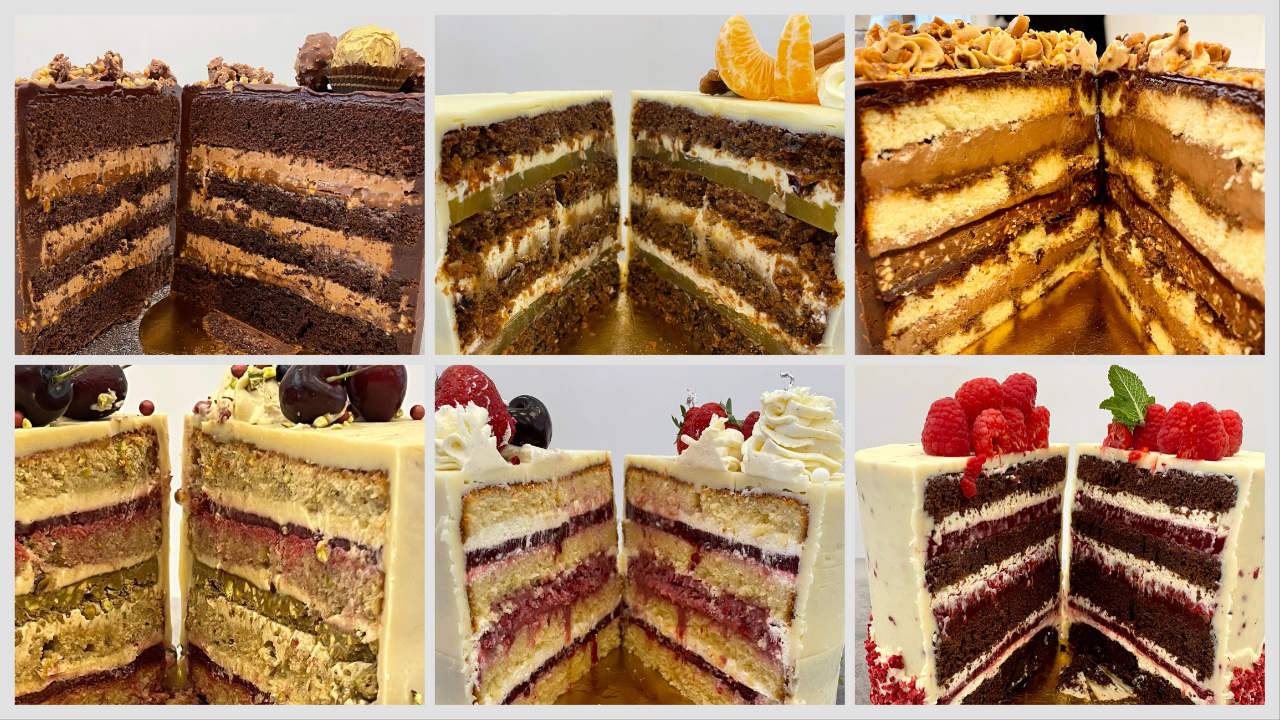
A beautiful cake catches the eye. A cake you remember after eating it — that's something else.
That memory doesn't come from the design. It comes from what happens in the mouth.
And that depends entirely on how the flavours were built together.
What most cake designers do
They offer separate flavours and let the client combine as they wish.
The result is often disappointing. Not because the flavours are bad. Because they weren't thought through together.
A flavour combination isn't an addition. It's a construction.
The logic of a combination that works
Intensities A strong flavour needs a neutral base to express itself. Intense praline overwhelms an already sweet cream. Sharp lemon is aggressive without a soft cream to balance it. The balance of intensities isn't intuitive — it's built.
Textures They carry flavours as much as the flavours themselves. A melting insert in a light cream doesn't produce the same experience as the same insert in a dense cream. Ignoring textures means building a combination that's only half thought through.
Sequence A good combination unfolds over time — what you perceive first, what settles in, what lingers. Building a combination means deciding that sequence too.
What this changes in practice
A cake whose flavours have been built with this logic tastes different. It's described differently. The client doesn't say "it was good" — they say "I'm not sure exactly what was in it, but it was memorable."
That's the experience that brings clients back. Not the design.
The construction of flavour combinations and the balance of textures are part of what is taught in the Sweet Design Academy Saveurs & Architecture course.
→ [Discover the Saveurs & Architecture course]
Other articles on the topic:
